
Flake epoxy
Coloured chips broadcast into the body coat and sealed under a clear topcoat. The most popular garage finish, because it hides dust and wear and gives a little texture underfoot.
Epoxy flooring
Epoxy only lasts as long as the slab underneath it. We grind, repair and prepare the concrete ourselves, then apply the finish you choose, so you get a floor that stays bonded, not one that starts peeling in a year.
Almost always because of what was under the coating, not the epoxy itself. Epoxy rolled over laitance, an old sealer, oil or a damp slab has nothing solid to bond to, and it starts lifting in patches. That is why every floor we coat is diamond ground back to clean, open concrete and checked before a drop of epoxy goes down.
Epoxy floors
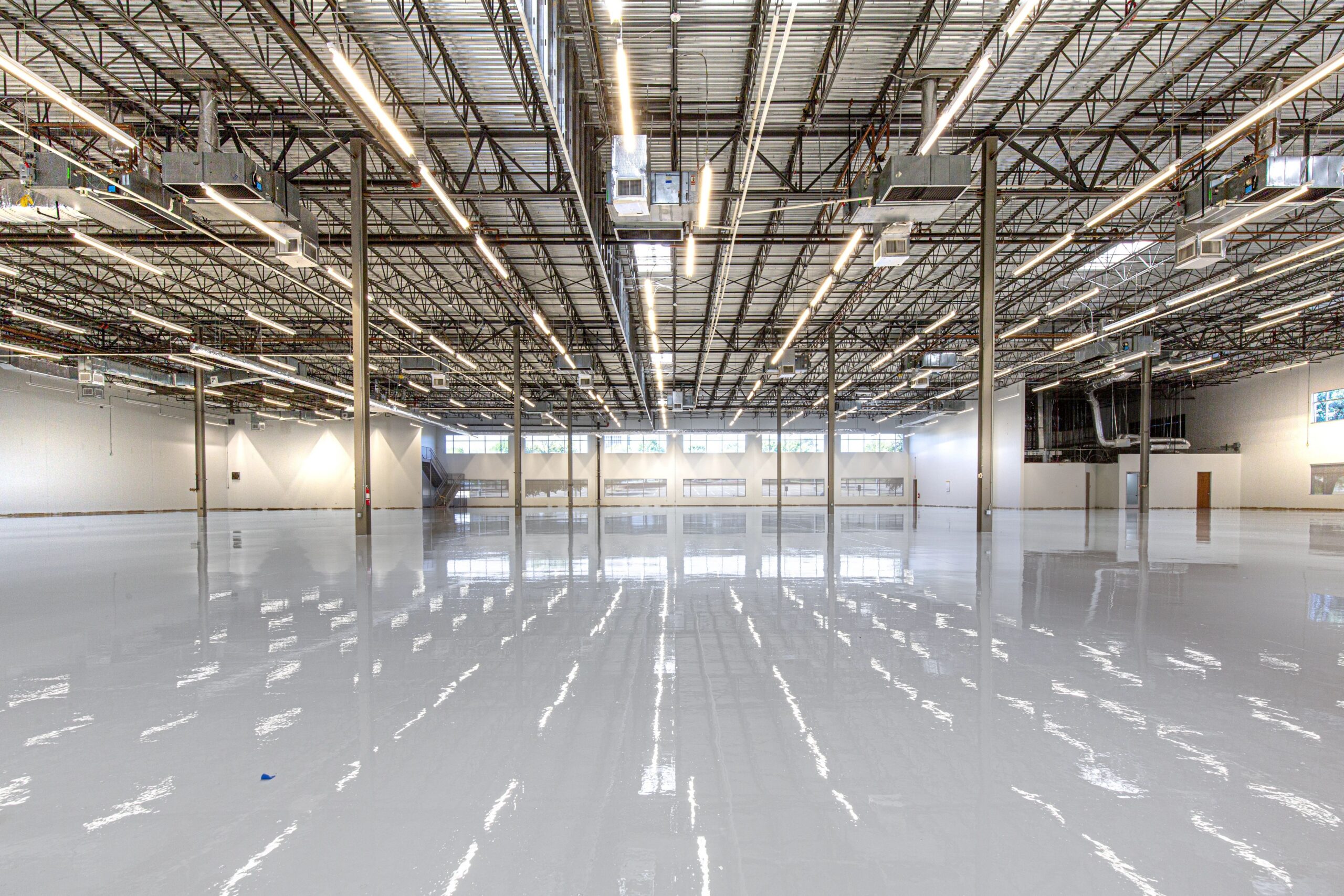
From a flake finish in a home garage to a seamless solid colour across a warehouse floor.


Tell us the size of the floor, what is on it now and how it is used, and we will tell you which system suits it.
Concreters who coat
Most epoxy installers inherit whatever slab they are given. We are concreters first, so we can read the slab, repair it properly, or pour a new one and coat it, all under one quote.
The complete package
The coating is the last day of the job. Everything before it decides whether the floor is still bonded in ten years.
We look at the slab’s age, condition, any existing coating and signs of moisture, and confirm the finish and system you need.
The surface is ground back to clean, open concrete, removing laitance, sealers and old coatings so the epoxy has something to grip.
Cracks, joints, chips and low spots are filled and ground flush, so they don’t telegraph through the finish.
A primer goes on to penetrate and seal the concrete, ready for the body coat.
The epoxy goes down, with flake, metallic pigment or anti-slip aggregate added depending on the finish you chose.
A clear or coloured topcoat seals it. We tell you when it is ready for foot traffic and when it is ready for vehicles.
Finishes
The finish is chosen for how the floor is used, not just how it looks.
Coloured chips broadcast into the body coat and sealed under a clear topcoat. The most popular garage finish, because it hides dust and wear and gives a little texture underfoot.
A seamless single colour, from light greys that brighten a workshop to safety colours for line marking. The usual choice for warehouses, factories and commercial floors.
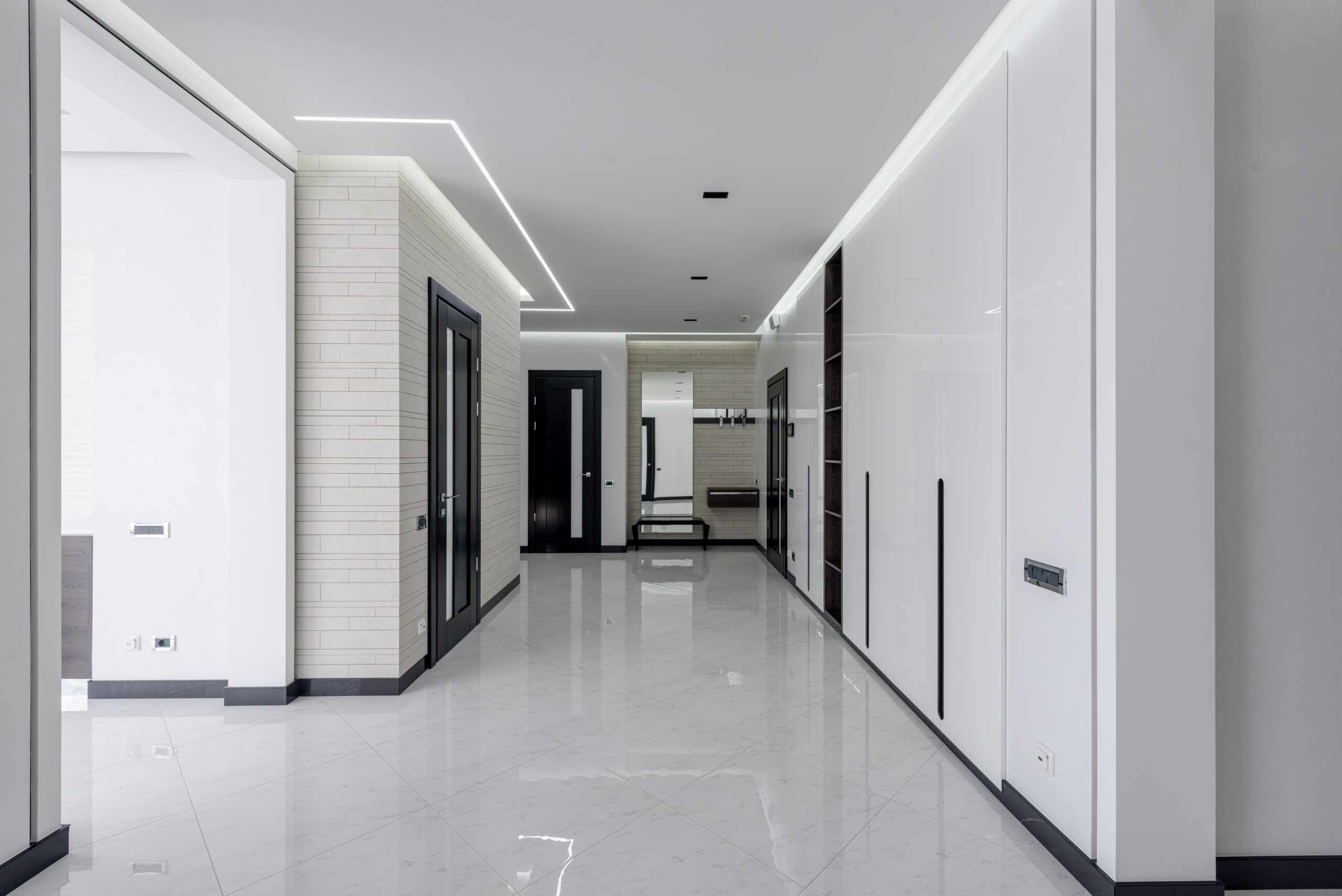
Metallic pigments worked through the coating to give a marbled, high-gloss look. Suited to homes, showrooms and fit-outs where the floor is a feature.
Aggregate broadcast into the coating for grip in wet areas, ramps, wash bays and commercial kitchens. The grit and coverage are matched to the slip rating the area needs.
Our standard
Two epoxy floors can look identical on handover day. What separates them is the preparation, and that shows up a year later.
| Preparation | Mechanical diamond grinding to clean, open concrete. No acid etching, which most coating manufacturers no longer recommend. |
|---|---|
| Moisture | The slab is checked for moisture before coating. A damp slab is one of the most common reasons epoxy lifts. |
| Repairs | Cracks, joints and damaged areas filled and ground flush before the primer goes down. |
| System | Primer, body coat and topcoat applied to the coating manufacturer’s specification for your floor and its use. |
| Slip resistance | Anti-slip aggregate added where the area needs it, matched to the rating required. |
| On your quote | Preparation, repairs, system and finish written down before you accept, so you can compare like for like. |
Pricing
Epoxy quotes vary because the preparation varies. A quote that skips the grind will always look cheaper.
Choosing a finish
The process is the same. What changes is the finish, the thickness and how much grip the floor needs.
Before you start
Two things worth knowing before you book an epoxy floor.
Fresh concrete is still drying and still has laitance on the surface. Coating suppliers generally call for new concrete to be at least 28 days old before it is coated, and the slab still needs to be ground and checked for moisture first.
If we are pouring your new slab, we plan the coating into the program from the start, so you are not waiting on two contractors.
Source: Sydney Industrial Coatings, epoxy flooring preparation guide; Sherwin-Williams, “Acid Etching Is No Longer Recommended as a Concrete Prep Method”. Checked 24 October 2026.
In Australia, slip resistance of floor surfaces is classified under AS 4586, and Standards Australia’s handbook HB 198 recommends minimum ratings for different areas. A smooth gloss epoxy can rate low when wet.
Where an area gets wet, slopes or carries the public, we add anti-slip aggregate to the coating. A coarse feel does not guarantee a rating on its own, so if your floor needs a specific rating, tell us at the quote and get it tested on site.
Source: AS 4586:2013 Slip resistance classification of new pedestrian surface materials; HB 198:2014 Guide to the specification and testing of slip resistance of pedestrian surfaces; Fosroc technical bulletin, Slip Resistant Flooring. Checked 24 October 2026.
Why Southo
We know what is going on in the slab underneath, and we can fix it properly rather than coat over it.
Diamond grinding is in every job we quote. It is the step a cheap epoxy quote is most likely to skip.
New garage, shed or workshop slab poured and coated by the same people, under one quote.
Garages and homes, offices and clinics, workshops, warehouses and factory floors.
NSW contractor licence 398552C, $20m public and product liability and workers insurance. Certificates of currency, SWMS and white cards on request.
If your slab is not right for epoxy yet, we will tell you why and what it needs first.
Send us a photo of the floor and rough measurements and we’ll tell you what it needs.
Reviews
Service area
Based in the Hawkesbury, working across the Hills, Sydney and the Central Coast.
Questions
Yes, once it has had time to dry. Coating suppliers generally call for new concrete to be at least 28 days old, and it still needs to be ground and checked for moisture before coating. If we pour the slab, we plan the coating into the program.
We diamond grind. Acid etching gives an inconsistent, shallow profile, adds moisture to the slab and does not remove sealers or oil, which is why most coating manufacturers no longer recommend it.
Not safely. Old paint, sealer or epoxy has to be ground off back to bare concrete, otherwise the new coating is only as well bonded as the old one.
A smooth gloss finish can be slippery when wet. Flake finishes give a little texture, and for wet areas, ramps and public spaces we add anti-slip aggregate to the coating, matched to the slip rating the area needs.
Yes. We pour garage, shed and workshop slabs, then grind and coat them once the concrete is ready, so it is one crew and one itemised quote from the ground up.
Yes. We coat warehouse and factory floors, workshops, offices and clinics, in solid colour and anti-slip systems, and can plan the work around your operating hours.
Yes. We grind and prepare the slab and apply the epoxy with our own crew. It is not subcontracted out.

Accuracy note
Standards and preparation information on this page is general and was correct at the date checked against the sources named above. Product requirements vary between coating systems and every slab is different. Spotted something out of date? Email southoconcrete2@outlook.com.


